GTS News Center & Latest Updates
Your Most Professional Enterprise Systems and Software Custom Development Provider!



GTS News Center & Latest Updates
With the ongoing digital transformation of manufacturing, smart cities, and industrial upgrading, the Industrial Internet of Things (IIoT) has become a core infrastructure for enterprises to improve operational efficiency, reduce risks, and achieve precise decision-making. Entering 2026, enterprises' needs for building IIoT systems have moved beyond simply "device connectivity" to encompass enterprise-level smart IoT solutions that include data governance, real-time analytics, AI prediction, and cross-system integration.
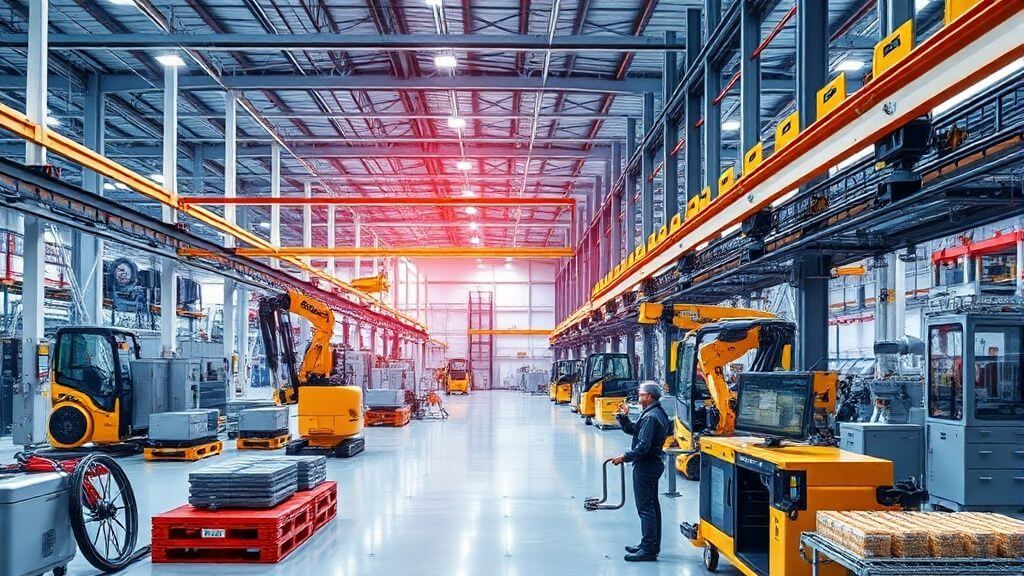
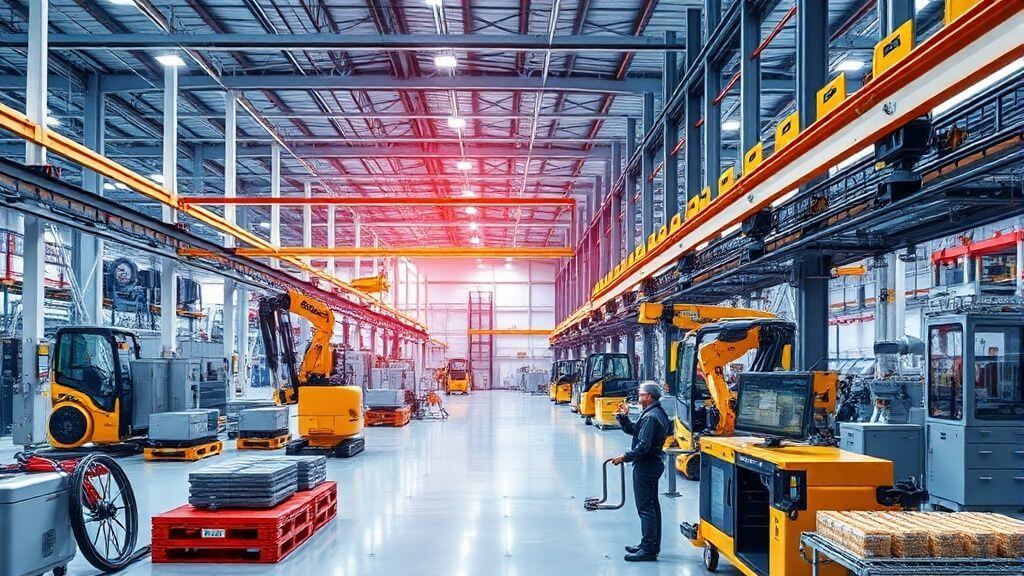
In manufacturing scenarios, building an IIoT system can comprehensively connect production equipment, sensors, and control systems, enabling: real-time monitoring of production line status (OEE, yield, energy consumption), immediate early warning of equipment anomalies, reducing unplanned downtime, digitizing production parameters, and supporting refined process optimization; through IIoT, enterprises can transform "passive maintenance" into "predictive maintenance," significantly improving production line stability.
Scenarios such as electricity, water, gas, and transportation highly rely on stable operation. IIoT systems can transmit equipment load, environmental data, and operational status in real time, assisting management units in intervening before problems escalate. They can be used for energy usage trend analysis and anomaly energy consumption location, as well as remote centralized management of distributed equipment. Smart Internet of Things (IoT) solutions enable enterprises and government departments to effectively reduce energy waste while improving system security and sustainability.
Combining RFID, location sensing, and edge computing, IIoT systems can improve the transparency of goods flow in logistics and supply chain scenarios through real-time material/goods tracking, warehouse environment monitoring (temperature, humidity, vibration), automatic replenishment, and inventory forecasting. Enterprises can instantly grasp inventory status, equipment utilization, and transportation efficiency, reducing delays and costs caused by human error.
In high-risk industries (chemical, mining, heavy industry), IIoT can instantly sense abnormalities in hazardous gases, pressure, and temperature, enabling real-time area entry and exit tracking, personnel location, automatic alarms for hazardous events, and coordinated response. For enterprises operating across multiple factories and locations, the key to building an IIoT system lies in a "standardized data perspective," meaning that through a unified platform architecture, management can compare operational performance across regions.
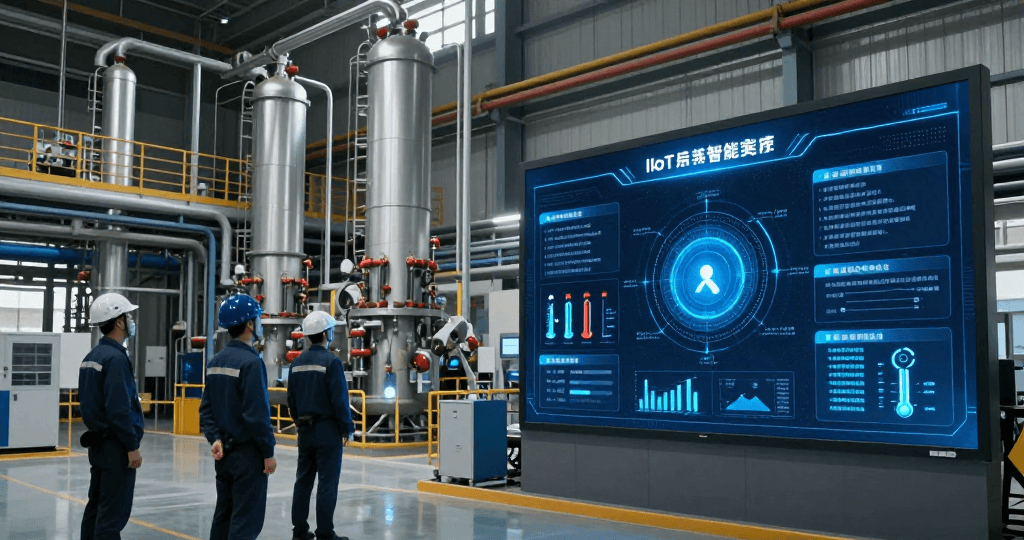
Through a unified enterprise-level IIoT platform, enterprise management can instantly grasp equipment operation, production line status, and energy consumption performance, shifting from reliance on experience and post-event reviews to real-time, quantifiable, data-driven decision-making. Simultaneously, combined with predictive maintenance and remote monitoring mechanisms, Industrial IoT can issue early warnings before equipment malfunctions or performance degradation, significantly reducing the risk of unplanned downtime and unexpected maintenance, helping enterprises effectively control operating costs and improve overall stability.
In practical implementation, enterprise-level Industrial IoT systems typically adopt a modular, multi-tenant, and scalable architecture design, allowing for smooth upgrades as business scale, number of factories, or equipment types increase, avoiding the high costs of future system rebuilds. Furthermore, modern smart IoT solutions can be deeply integrated with AI predictive models, BI analytics platforms, and core business systems such as ERP/MES, forming a complete data loop from device data collection and real-time analysis to management decision-making, truly transforming operational data into a sustainable competitive advantage.
Not all enterprises are suitable for the same IoT implementation approach. Whether to choose a smart IoT solution requires comprehensive evaluation from multiple perspectives.
1. Implementation Objectives of Enterprises of Different Sizes: Large enterprises typically focus on cross-system integration, long-term scalability, and data governance; medium-sized enterprises hope to improve operational visibility and reduce labor costs through IoT; while some small enterprises, lacking clear application scenarios, may find it difficult to sustain operations after initial investment.
2. Differences Between Smart IoT and Industrial IoT: Smart IoT emphasizes data integration, analysis, and decision support, rather than just device connectivity, and is geared towards consumer or commercial scenarios, such as smart buildings and offices. The Industrial Internet of Things (IIoT) places greater emphasis on stability, real-time performance, and in-depth monitoring of critical equipment, stressing high reliability, immediacy, security, and support for industrial protocols. When planning an IIoT system, enterprises need to clarify whether their needs fall under "management optimization" or "production and operations control," and choose a platform that truly meets industrial-grade requirements.
3. When is immediate implementation not recommended? If enterprise processes are not yet standardized, data definitions are chaotic, or IoT is implemented merely due to trends, problems such as system rebuilding and unusable data often arise later. In such cases, hasty implementation may increase future costs.
4. How to assess suitability?
Enterprises can start by asking three questions:
a. Are there currently any devices or processes that clearly require real-time monitoring or integration?
b. Can the data support actual decision-making, rather than just for display?
c. Does the system need to coexist with the existing IT architecture long-term?
If the answers are mostly yes, then a smart Internet of Things (IoT) solution can bring substantial value to the enterprise.
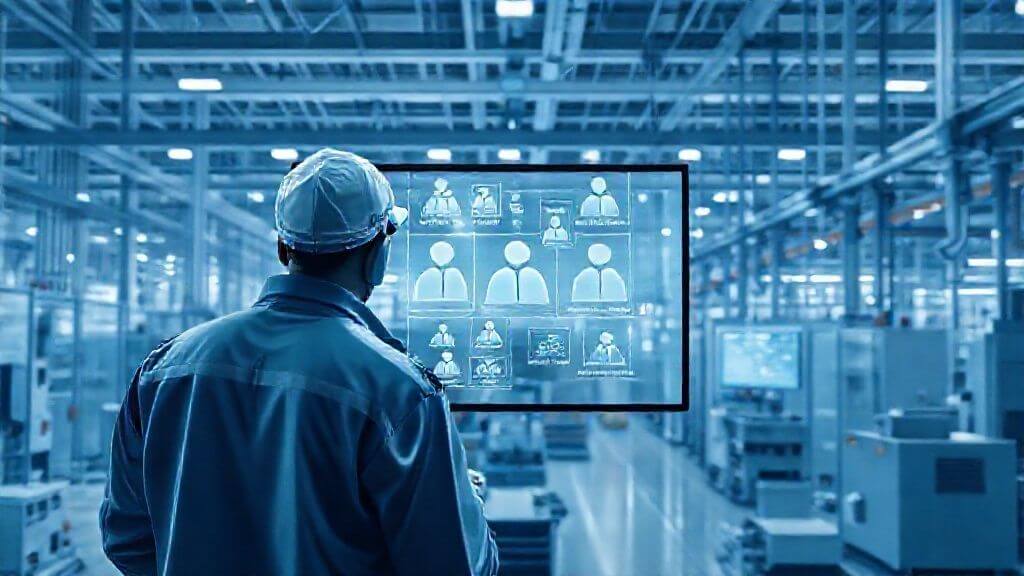
GTS, as your customized development partner for enterprise-level industrial IoT application systems, covers device access, edge computing, real-time monitoring, AI predictive maintenance, 3D visualization, and multi-tenant access control, and supports complex industrial protocols and zero-trust security architectures. When assisting enterprises in building industrial IoT systems, GTS utilizes modular design and one-stop delivery to help them robustly complete system construction and truly transform data into operational value.
By 2026, industrial IoT will no longer be just a technology option, but a necessary foundation for enterprises to enhance their digital competitiveness. The truly suitable industrial IoT system construction is not about pursuing a large number of devices or stacking functions, but about establishing a smart IoT solution that supports decision-making and continuous evolution, gradually transforming IoT into a long-term usable operational asset.
This article, "Industrial IoT Systems in 2026: Key Applications, Advantages, and Examples" was compiled and published by GTS Enterprise Systems and Software Development Service Provider. For reprint permission, please indicate the source and link: https://www.globaltechlimited.com/news/post-id-8/