GTS News Center & Latest Updates
Your Most Professional Enterprise Systems and Software Custom Development Provider!



GTS News Center & Latest Updates
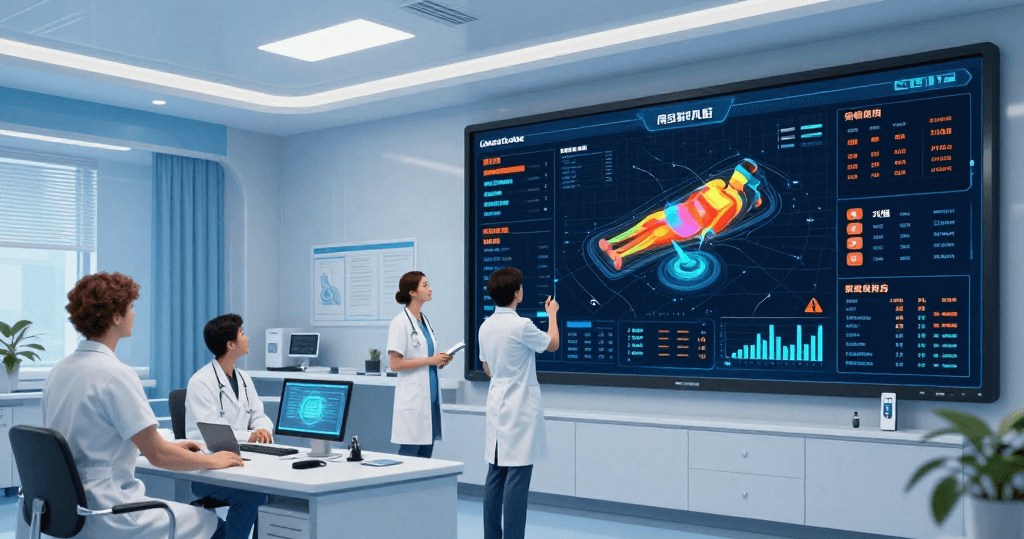
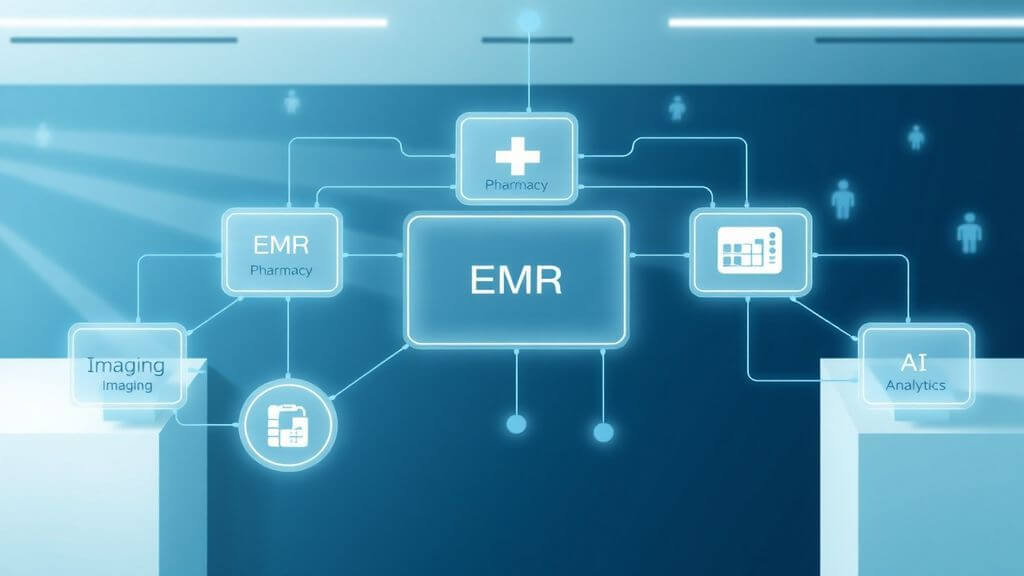
As hospitals, specialty centers, and chain clinics face a highly consistent challenge—continuously rising demand for medical services alongside escalating operational and compliance pressures—existing information systems are increasingly unable to support efficient decision-making and cross-department collaboration. Hospital Management System Development is no longer merely a technical initiative led by IT departments, but a management issue that directly impacts operational resilience and long-term competitiveness. During system upgrades or restructuring, many management teams tend to focus on three core questions simultaneously: Which modules should the system include? How should overall development and integration costs be evaluated? And how can a new system be ensured to integrate effectively with the existing healthcare ecosystem? From a practical perspective, this article provides a comprehensive breakdown of the key considerations Hong Kong healthcare institutions face throughout HMS / HIS planning and implementation. Modern hospital management systems are no longer single platforms, but integrated architectures spanning clinical operations, daily administration, and executive decision-making. Common core modules include online appointment booking and registration, electronic medical records (EMR), pharmacy and inventory management, medical imaging systems (PACS), and AI-assisted analytics modules that are being gradually introduced. Before planning an HMS architecture, management teams must first clarify how different hospital management system modules are applied in real clinical and operational scenarios. For those seeking a more structured understanding of the fundamental functions and common application scenarios of HMS / HIS, you may refer to our previous overview: “What is an HMS/HIS Healthcare Management System? Basic Functions and Application Scenarios.” From an architectural design perspective, what truly determines system performance is not the number of modules, but whether data can flow in real time across modules and support cross-department workflows. This factor often becomes the dividing line between manageable and escalating costs, as well as integration complexity. Within the Hong Kong healthcare environment, the development cost of a hospital management system is primarily driven by three factors working in combination. EMR or pharmacy modules that appear similar on the surface can differ significantly in clinical workflow support, permission design, and data structures. The cost structure between “functional” and “usable, scalable, and extensible” systems is fundamentally different. Most healthcare institutions are not starting from scratch; instead, they must integrate with existing HIS, PACS, LIS, and even third-party financial or scheduling systems. The more complex the integration layer, the higher the demands placed on system architecture and data governance—making this one of the most commonly underestimated sources of hidden cost. In Hong Kong, systems must comply with PDPO requirements for patient privacy and include comprehensive access control and audit capabilities. These design elements cannot be retrofitted after deployment and must be incorporated into the overall architecture from the earliest development stages. For Hong Kong healthcare institutions, the value of an HMS often depends on whether it can operate in coordination with the existing ecosystem. This goes beyond technical data interfacing and extends to whether real-world workflows remain smooth and efficient. Common challenges include inconsistent data definitions across systems, increased staff workload due to duplicate data entry, and a lack of real-time synchronization mechanisms. When integration with public-sector systems or HA-related platforms is required, interface standards and security mechanisms must be planned in advance, or subsequent adjustments will incur extremely high costs. Therefore, in Hong Kong Healthcare Management System Development practice, a mature approach is to first map critical workflows and then derive the system integration strategy—rather than pursuing technical specifications in isolation. A truly sustainable HIS treats privacy and information security as foundational design principles rather than optional add-ons. In practice, this includes granular role and permission management, comprehensive operational logging and audit trails, and tiered access controls for sensitive data. For management teams, these designs are not only compliance requirements but also directly influence incident risk and organizational trust. If a system cannot clearly reconstruct data access histories, it may become an operational liability during internal audits or regulatory inspections. As data quality and system integration maturity improve, AI is gradually shifting from a purely analytical tool to an integral component of healthcare management decision-making. Through predictive models, systems can help management anticipate bed demand, staffing pressure, and medication consumption trends, enabling proactive resource allocation. At the clinical level, AI can also support risk alerts and diagnostic decision assistance—provided it is deeply integrated with the core HIS architecture. This is why an increasing number of institutions choose customized system planning approaches rather than deploying standalone plug-in tools. In summary, Hospital Management System Development is not merely a technology selection exercise, but a strategic decision involving cost structures, operational efficiency, and long-term risk management. For Hong Kong healthcare institutions, clarifying system architecture, integration logic, and future scalability at an early stage is often far more critical than simply comparing initial quotations. The GTS healthcare technology team has long been deeply engaged in Hong Kong’s private healthcare sector, providing enterprise-grade HIS/HMS system planning, development, and integration services. By supporting management teams in building compliant and continuously evolving medical information architectures, GTS helps institutions move forward with confidence. If you are currently evaluating the next phase of system upgrades or restructuring, we welcome you to connect via our consultation form to explore the HMS planning and cost strategy best suited to your organization.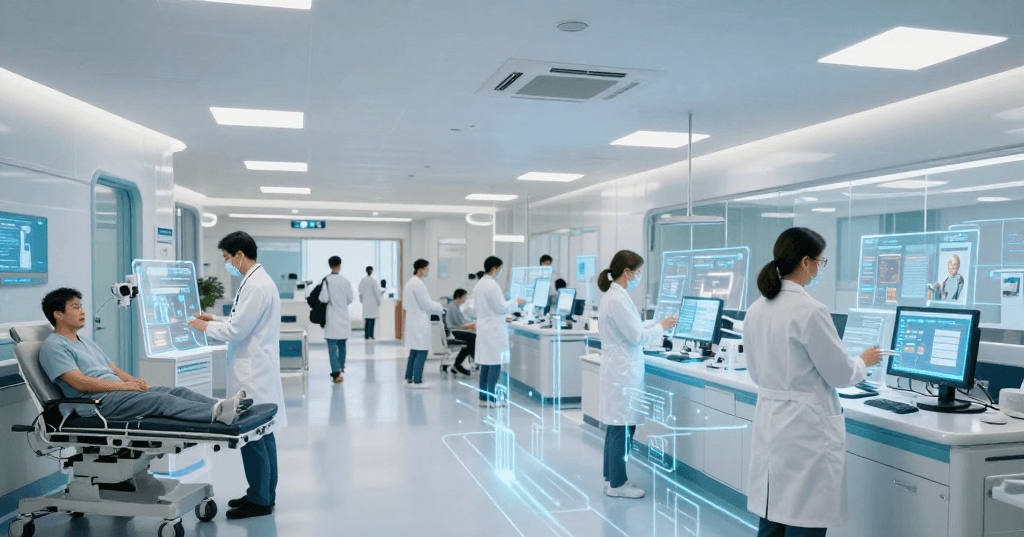
I. Core Modules and Architecture of Modern Hospital Management Systems
II. Key Cost Drivers in HMS Development: Beyond "How Many Features"
1. Scope and Depth of Functionality
2. Integration Burden
3. Compliance and Risk-Control Design
III. Integration with Existing Healthcare Ecosystems: Challenges
IV. Practical Considerations and Security Design for High-Quality HIS Development
V. Future Trends: How Smart Healthcare and AI Are Changing Decision-Making

V. From Strategy to Execution: How Should the Next Step Be Planned?