GTS News Center & Latest Updates
Your Most Professional Enterprise Systems and Software Custom Development Provider!



GTS News Center & Latest Updates
Over the past few years, our team has worked closely with management teams across Hong Kong and the Greater Bay Area. Many of them share the same question: “We have already implemented IoT—so why are our operational decisions still based on experience rather than data?” Devices are connected, data is visible, yet enterprises often fail to feel any real impact from “digital transformation.”
The issue is rarely execution capability. More often, it lies in treating traditional IoT as an Industrial IoT solutions strategy from the very beginning. The difference between the two is not about technical details, but a management decision that will shape operational efficiency over the next decade.
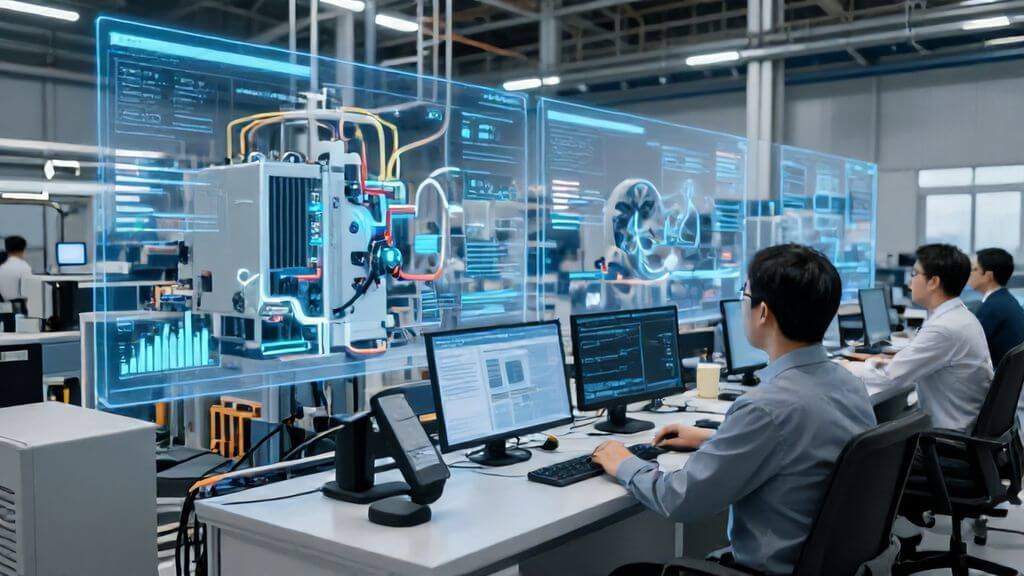
In the initial phase of IoT adoption, most enterprises start with a single device or production line. Sensors are installed, data is uploaded to the cloud, and the project appears complete. However, operational bottlenecks quickly emerge, including:
1.Devices are connected, but data only shows temperature, pressure, or usage—unable to answer whether capacity should be adjusted or support operational decision-making.
2.Data is visible, but cannot be translated into action. Alerts are triggered only after incidents occur, with no predictive or proactive intervention.
3.Systems operate independently, increasing management overhead. Each system works, but no one has a complete operational view.
These are the typical limitations of traditional IoT: it solves connectivity issues, but not enterprise operational challenges.
1.Traditional IoT focuses on devices, with fragmented systems and data mainly used for visualization and monitoring.
2.Digital Industrial IoT centers on operational processes, enabling collaboration between data, systems, and people—where data directly influences scheduling, maintenance, and decision-making.
From a product R&D and practical implementation perspective, the core difference is not “technical sophistication,” but the starting point of thinking. In other words, this is not an engineering option—it is an operational design choice made by management.
In most stalled or failed IoT projects, the problem is not insufficient technical capability, but incorrect architectural direction at the early stage. As more systems are added, integration costs escalate rapidly. Each new production line requires rewriting integration logic, while maintenance manpower and outsourcing expenses accumulate year after year.
These “hidden costs” often surface in the second or third year, turning what began as a small pilot into a long-term operational burden.
A sustainable Industrial IoT solutions strategy must address both operational realities and production constraints. Key characteristics include:
Long-term stable operation: systems must run 24/7 without disrupting production during updates
Non-intrusive exception handling: clear isolation and degradation mechanisms
Scalable architecture: rapid onboarding of new equipment and facilities
These are not merely indicators of technical maturity, but a company’s long-term ability to control Total Cost of Ownership (TCO).
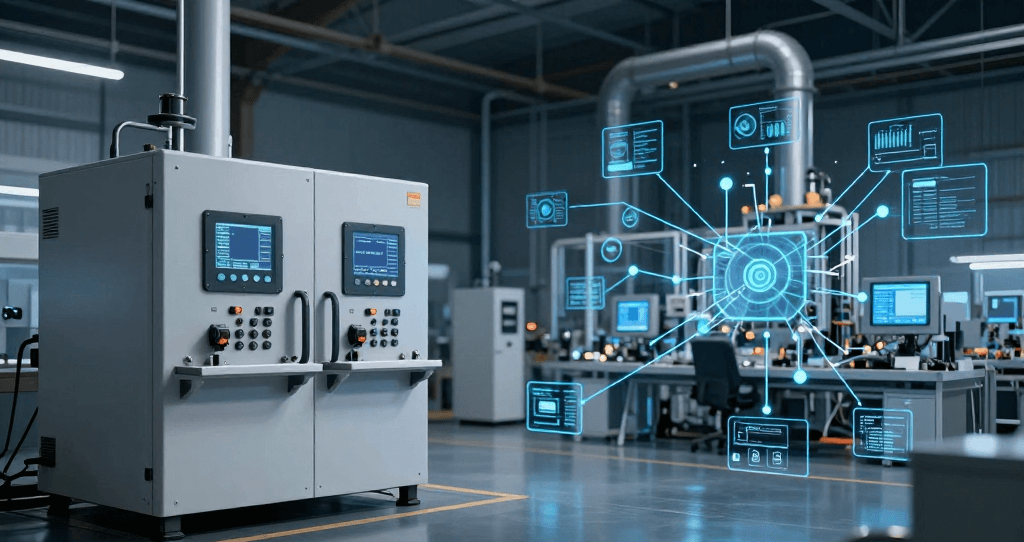
Traditional IoT still has its value, but enterprises must rethink their approach under the following conditions:
Expansion from single pilots to full factories or multiple sites
Management demands data-driven decision-making
Integration with existing systems such as ERP, MES, and CRM
Across industries—including manufacturing, energy, and equipment services—the depth and rhythm of data usage vary. However, one conclusion remains consistent: display-oriented IoT cannot sustain enterprise operations.
[Submit your request for an Industrial IoT consultation.]
FAQs:
Q: Does every enterprise need Digital Industrial IoT solutions?
A: If a company is still in the single-point trial stage, IoT is generally sufficient; however, as long as it involves cross-system and cross-plant operations, or needs to integrate industrial IoT with existing ERP, MES, and CRM systems, digital architecture is inevitable.
Q: Is the implementation cost always higher?
A: Initial investment may be slightly higher, but long-term TCO is typically lower—especially during expansion phases.
When assessing vendors, GTS recommends focusing on the following rather than feature lists alone:
1.Architectural flexibility and integration capability: Can the solution coexist with existing systems instead of replacing them entirely?
2.Understanding of real operational workflows: Does the vendor recognize that equipment is only one part of operations?
3.Long-term support and local experience: Can the partner evolve with the enterprise rather than disengaging after delivery?
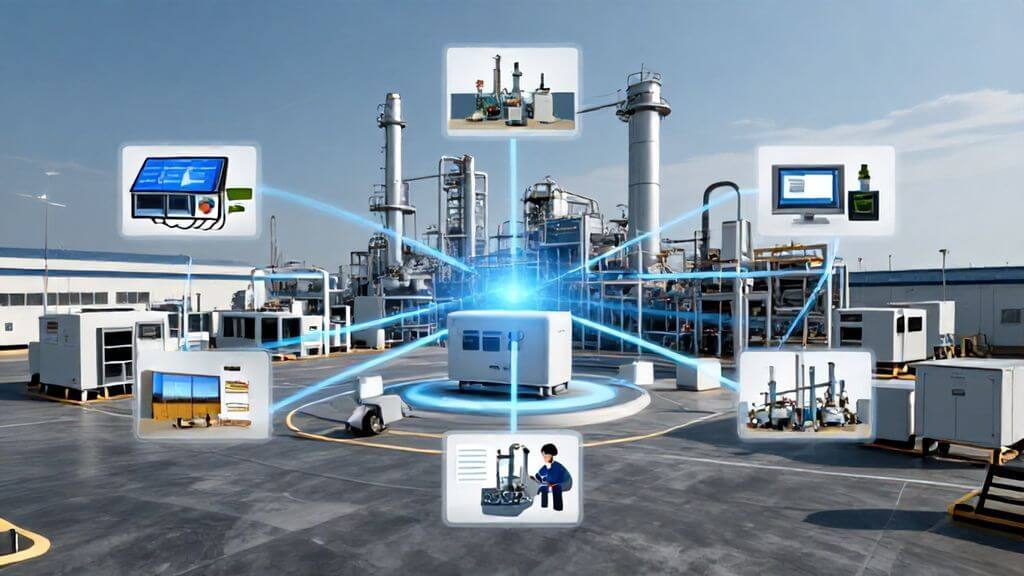
Take “Xintai Cloud,” a water purification equipment provider served by the GTS team, as an example. The company had previously deployed multiple IoT systems, yet equipment, data, and customer operations remained fragmented, with heavy reliance on manual maintenance.
Rather than rushing into feature development, GTS first helped restructure the overall system logic—identifying which data required real-time processing and which could be integrated later. By building a modular unified platform, the enterprise successfully integrated multi-end interfaces and edge devices, enabling data to truly support operational decision-making while reducing future expansion and maintenance costs. This illustrates the essential difference between Digital Industrial IoT and traditional IoT.
Industrial IoT solutions are never a one-time system launch—they form the foundational infrastructure supporting enterprise operations and growth over the next decade. If your organization is evaluating the transition from IoT toward true digitalization, clarifying architectural direction and integration strategy before investing is critical.
GTS’s architecture assessment and consulting services are designed to help enterprises avoid costly detours early on and establish a sustainable, scalable operational foundation.
This article, "Digital Industrial IoT Solutions: How Are They Different from Traditional IoT?" was compiled and published by GTS Enterprise Systems and Software Development Service Provider. For reprint permission, please indicate the source and link: https://www.globaltechlimited.com/news/post-id-19/