GTS News Center & Latest Updates
Your Most Professional Enterprise Systems and Software Custom Development Provider!



GTS News Center & Latest Updates
Why Enterprises Must Focus on Financial Trading System Development?
From traditional brokerage firms to asset management companies, from cross-border trading platforms to digital asset exchanges, Financial Trading System Development is no longer merely a technical task for the IT department; it has become a core strategic asset that drives overall operational efficiency, risk management, and business innovation.
For enterprises in China and globally, financial market competition is increasingly intense. Trading speed, system stability, and compliance capabilities directly impact an enterprise’s market position and user satisfaction. Whether trading Hong Kong stocks, US equities, foreign exchange, or digital assets, the performance and reliability of the trading system are critical factors that executives cannot overlook.

A financial trading system is an IT system that supports the end-to-end process of capital, securities, derivatives, or digital asset trading. It differs from payment systems, clearing systems, and risk control systems: payment systems handle fund transfers, clearing systems are responsible for settlement, while the trading system manages the full workflow from order placement to execution, risk monitoring, and reporting. Typical modules include:
Order Management (OMS): Receiving, routing, and executing client orders
Matching Engine: High-speed matching of buy and sell orders, ensuring low latency and high throughput
Risk Control System: Real-time monitoring of trading risks, margins, and abnormal behavior
Front-End UI / API: Supports Web, Mobile, and desktop trading operations
Reporting & Analytics: Provides trading statistics, performance analysis, and regulatory compliance reports
Microservices and Modular Architecture: Trading, risk control, and reporting modules can be deployed independently, facilitating iterative upgrades and future multi-asset expansion.
Low Latency and High Availability Design: The core matching engine and order processing system support millisecond-level latency, maintaining stability even during peak trading periods.
Data Consistency and Isolation: Ensures data consistency across modules, preventing financial or trading errors.
Security and Permission Management: Multi-layer access control, audit logs, and data encryption satisfy regulatory requirements and reduce operational risks.
Integration with Existing IT Ecosystem: The trading system must integrate seamlessly with CRM, KYC/AML, and reporting systems, improving operational efficiency and supporting future scalability.
In real enterprise financial trading scenarios, no two organizations have identical business requirements. As a result, many financial institutions choose tailor-made solutions when undertaking Financial Trading System Development.
When deciding on customization, enterprises typically consider three major factors:
First, the scale and complexity of the business, such as cross-border or multi-asset transactions, require extremely low latency and extremely high system stability.
Second, compliance and auditing requirements, including KYC, AML, and other regulatory standards, must be considered during the initial system design phase.
Third, user workflows and brand experience are crucial, as businesses aim for complete integration of the front-end interface with customer service systems to enhance user satisfaction.
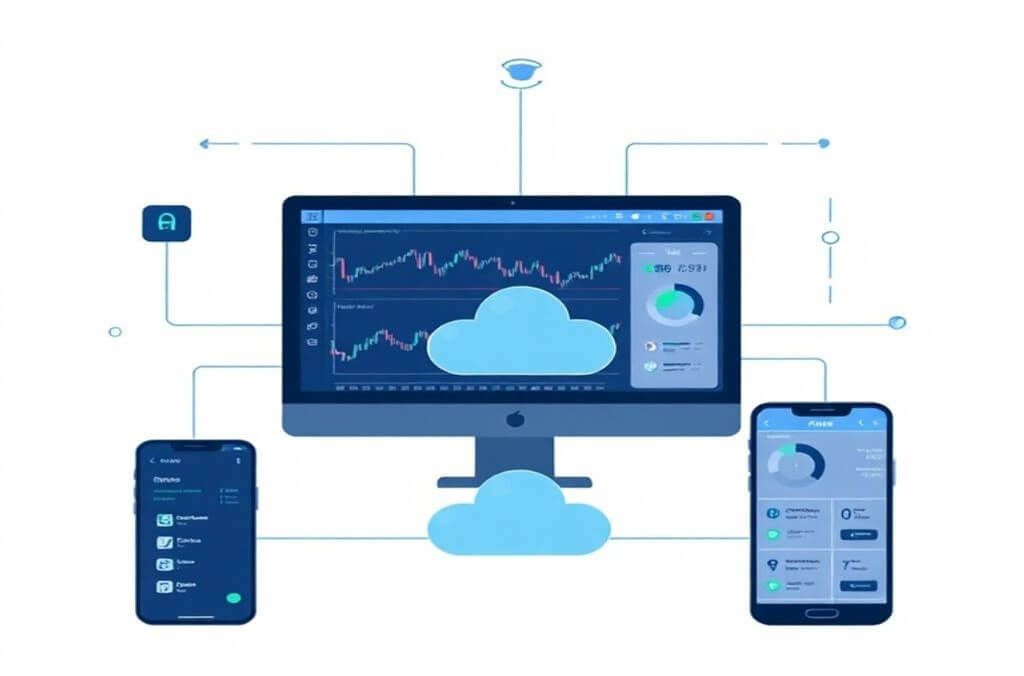
Under these circumstances, customized systems are generally implemented in phased deployments: first plan the overall architecture and core modules, clarify which features need immediate launch, and which can be incrementally developed. This ensures that enterprises gradually complete Financial Trading System Development without disrupting daily trading operations.
In practical enterprise deployment, the core value of trading system development is solving real business pain points. A professional case provided by the GTS team for Zetrader illustrates this:
1、Zetrader is a professional financial trading service provider operating across multiple countries and regions, facing the following challenges:
a. High concurrency demand: simultaneous orders from global users, creating significant data processing pressure
b. High immediacy requirements: trading delays could result in financial losses and user churn
c. Global network optimization: cross-region data synchronization and latency management
2、Solution: GTS provided a fully tailored trading system with key highlights including:
Low-latency matching engine and high-availability architecture: ensures orders are matched within milliseconds
Real-time data synchronization: optimized cross-region servers and global network to ensure instant trading
Automated risk control and monitoring: algorithms provide timely risk management, reducing potential threats
Multi-end integration: seamless access via Web, Mobile, and desktop platforms enhances user experience
3、Outcome and Value: Through this trading system development solution, Zetrader not only improved system stability and trading speed but also significantly enhanced user satisfaction and market competitiveness. This case fully demonstrates the core value of Enterprise Financial Trading Solution—reliable, efficient, and scalable in practical deployment.
When promoting Enterprise Financial Trading System Development, enterprises often face practical challenges. Data consistency must be strictly controlled across modules and regions to prevent financial or trading errors. During peak trading periods, systems must maintain low latency and high availability to ensure users can place orders instantly. Compliance and regulatory requirements such as AML/KYC, GDPR, and PCI must be embedded in processes to guarantee adherence. Cross-department collaboration is also crucial, with development, operations, business, and compliance teams working closely to ensure stable system deployment.

Thus, even with well-designed and customized solutions, enterprises should allocate risk buffers, establish monitoring and rollback mechanisms, and ensure secure and reliable operations. Finally, if your enterprise seeks to optimize trading system performance, enhance global trading capabilities, or develop a dedicated Enterprise Financial Trading Solution, contact GTS to schedule a consultation and demo. We will help plan a highly efficient trading system tailored to your business needs.
This article, "Fintech Trading System Development Explained: A Practical Guide for Enterprises" was compiled and published by GTS Enterprise Systems and Software Development Service Provider. For reprint permission, please indicate the source and link: https://www.globaltechlimited.com/news/post-id-15/