GTS News Center & Latest Updates
Your Most Professional Enterprise Systems and Software Custom Development Provider!



GTS News Center & Latest Updates
In Hong Kong, with the increasing demand for digital operations from healthcare institutions, more and more private hospitals, specialist centers, chain clinics, and medical groups are focusing on the custom development of healthcare information systems (HIS). However, for many management teams, choosing the right HIS vendor remains a significant challenge. This article will analyze the core issues for enterprises in the development, deployment, operation, and maintenance of HIS/HMS systems and provide practical evaluation guidelines.

If you are not yet familiar with the main categories of systems categorized by common business scenarios, you can first learn about: What types of Hospital Management Systems (HMS) are there? How to choose a custom development solution? Healthcare institutions often have many questions before selecting a system:
1. Can the HIS/HMS system fully match our business processes?
Off-the-shelf systems often tend to use generic templates, making it difficult to cover the specific process needs of a clinic or hospital. GTS's custom development of healthcare information systems focuses on the actual operations of the enterprise, deeply understanding the entire process of outpatient, inpatient, surgical, laboratory, and radiology operations, and then designing a scalable system architecture that is highly tailored to actual operations.
2. Does it support multiple languages and data interoperability?
Hong Kong healthcare institutions often involve bilingual operation in Chinese and English and HA data interoperability requirements. GTS's HMS/HIS platform features a built-in FHIR R4/HL7/EMR universal adapter, enabling seamless integration with other healthcare systems. It also provides basic Cantonese/English bilingual configuration to ensure smooth information flow across departments and systems.
3. How does AI-assisted functionality improve healthcare efficiency?
The GTS system combines voice and AI medical record functionality. Through a hybrid LLM voice engine, it can generate structured SOAP medical records and automatically encode them within 90 seconds, significantly reducing doctors' manual data entry time and improving diagnostic and treatment efficiency.
When selecting a system, enterprises are most concerned about the deployment cycle and launch speed:
Project Planning Phase: This includes requirements gathering, process streamlining, and preliminary design, typically requiring 2-4 weeks. GTS will work with hospitals or clinics to analyze existing business processes to ensure that system functionality aligns with actual operations.
System Development and Configuration Phase: For Customized Development of Medical Information Systems, the microservice architecture can accelerate the development and testing of various modules (outpatient, inpatient, surgery, laboratory, etc.), with an average cycle of 8–12 weeks (the specific time depends on the complexity and urgency of the functions).
Deployment and Trial Operation: After development is complete, the system enters the pre-launch testing phase, with simultaneous employee training. Phased deployment is supported, ensuring that key modules such as electronic medical records, pharmacy, and imaging diagnostics are prioritized for use.
Official Operation: Once the entire system is online, the medical institution can begin comprehensive digital operations.

Launch is just the beginning; the continuous operation and upgrades of the medical information system are equally important. The HMS/HIS system provides a full-process monitoring and early warning mechanism. Any anomalies can be quickly reported to the technical team, ensuring uninterrupted treatment processes. Furthermore, medical needs will continuously adjust with changes in policies, regulations, and hospital size. GTS is designed with a microservices architecture, enabling incremental and rolling deployment of feature updates to avoid overall system downtime. It also continuously optimizes modules such as AI-assisted decision-making, medical record generation, and CRM, improving overall work efficiency.
Hong Kong's medical data is highly sensitive, and GTS's localized private engine and zero-trust architecture effectively ensure data security. During system updates, data usage, model behavior, and deployment methods remain fully controllable, meeting auditing and high-availability (HA) data interoperability requirements, ensuring long-term stable, secure, and efficient system operation.
Implementing an HMS/HIS system in Hong Kong is not just a technology selection process; it directly impacts the daily operational efficiency, patient experience, and data security of healthcare institutions. Many companies tend to focus solely on the feature list or price when choosing a system, neglecting the vendor's overall strength, customization capabilities, and long-term support capabilities.
In fact, these factors determine whether the system can be truly implemented and whether it has the ability to grow and evolve with the business. Choosing a reliable healthcare information system vendor is crucial for the successful implementation of an HMS/HIS system. The following assessment highlights will help enterprises make more rational decisions and understand the core value of custom-developed healthcare information systems:
1. Industry Experience and Case Studies: Choose vendors with local healthcare experience in the Greater Bay Area. For example, GTS has provided complete HMS/HIS solutions for numerous private hospitals and clinics, demonstrating a deep understanding of local policies, regulations, and business scenarios.
2. Customization Capabilities: General-purpose systems often struggle to meet the demands of complex and diverse business processes. Custom-developed healthcare information systems ensure the system fully aligns with the enterprise's actual operations, covering outpatient, inpatient, surgical, laboratory, and radiology services, and can be flexibly adjusted through modular microservices.
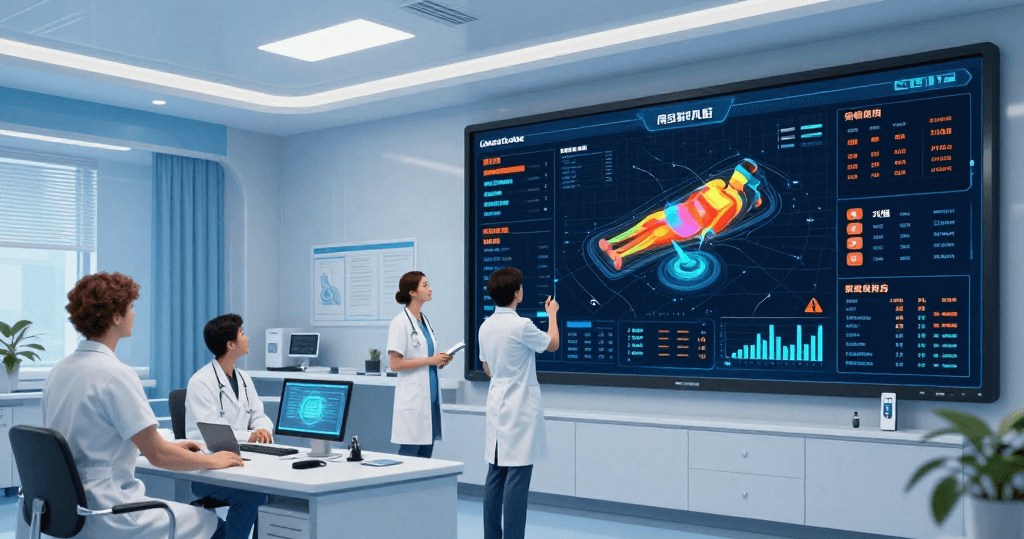
3. Technical Architecture and AI Capabilities: GTS's advanced microservice architecture and generative AI capabilities enable AI-powered voice medical record generation, AI information assistants (structured retrieval), AI data insights (BI visualization), and AI-assisted diagnosis (risk warning), improving clinical and management efficiency through multimodal data integration.
4. Maintenance and Upgrade Support: Choose vendors that can provide long-term maintenance, continuous upgrades, and security compliance guarantees to ensure stable system operation as business scales.
5. Integration Capabilities and Interoperability Standards: Does it support FHIR R4 / HL7 / EMR standards to ensure seamless integration with other systems and third-party platforms, and guarantee smooth data flow between different departments and clinics within the medical group?
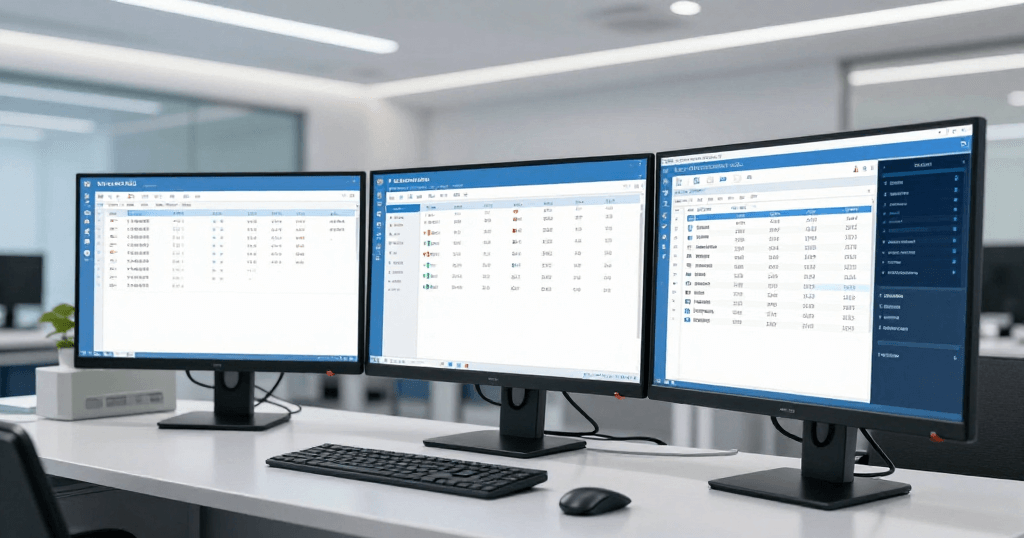
For enterprise medical institutions, choosing a suitable HMS/HIS system is not only related to information technology construction, but also directly affects diagnostic and treatment efficiency and patient experience. This article systematically outlines the FAQs for medical information system development, the launch and deployment cycle, maintenance and upgrade mechanisms, and key evaluation points for selecting a vendor.
By selecting a professional medical information system vendor (such as GTS) with local experience and support for customized development of HMS/HIS medical information systems, enterprises can quickly deploy a secure, stable, and intelligent integrated HMS/HIS platform to achieve the digitalization of the entire process of outpatient, inpatient, surgical, laboratory, radiology, and CRM operations. Furthermore, by leveraging AI-assisted diagnosis and treatment and multimodal data integration, operational efficiency and decision-making quality can be continuously improved, truly moving towards smart healthcare.
This article, "Hong Kong Healthcare Information System Guide: 5 Practical Evaluation Points & FAQs" was compiled and published by GTS Enterprise Systems and Software Development Service Provider. For reprint permission, please indicate the source and link: https://www.globaltechlimited.com/news/post-id-12/