Products and Services

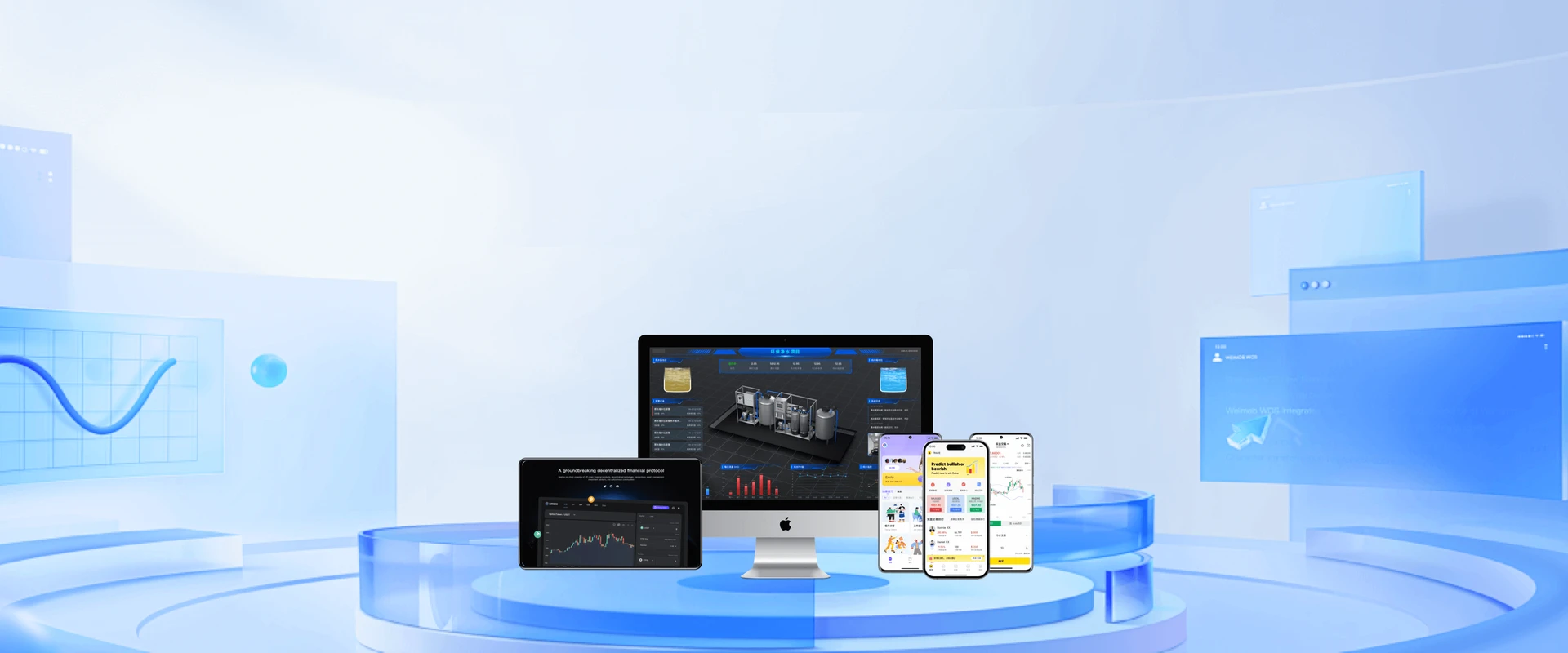
Full-Stack Financial Trading System

Full-Stack Financial Trading System

GTS is a fintech pioneer delivering end-to-end, secure, stable trading experiences and clearing infrastructure for over 50 brokerages, asset managers, and futures institutions. Leveraging ultra-low latency matching, distributed high-concurrency architecture, quantitative-grade risk control engines, and auditable blockchain contracts, GTS helps significantly reduce maintenance costs and deployment complexity.

Learn More
HMS Healthcare Management System

HMS Healthcare Management System

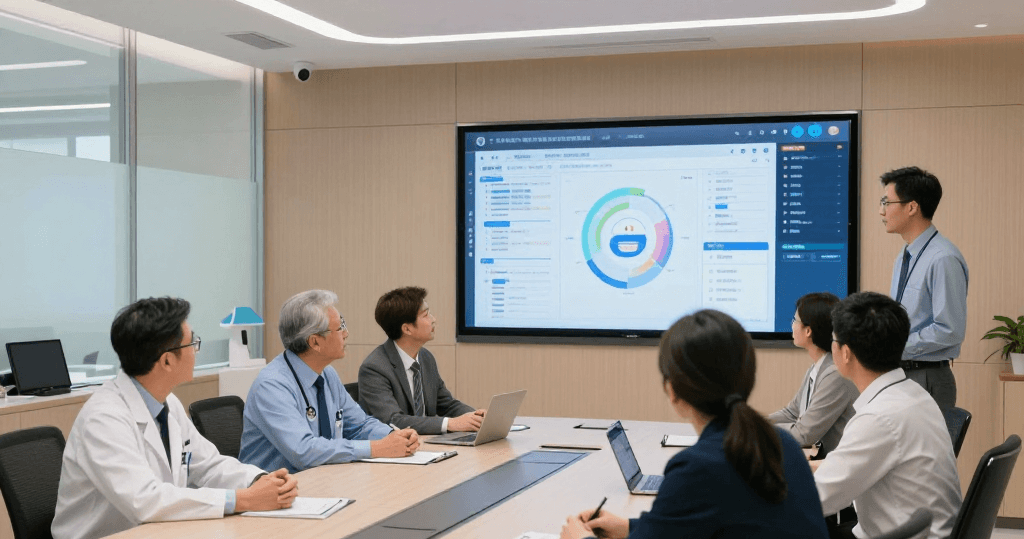
GTS provides highly reliable, scalable, end-to-end HMS (Hospital Management System) custom development for healthcare institutions across the Greater Bay Area. From appointment scheduling, diagnosis and treatment, inpatient care, surgery, pharmacy, and laboratory, to medical imaging, inventory, billing, and data compliance, our solution makes opeartions traceable, costs mearsurable, and patient services seamless.

Learn More
Custom AI Innovation Solutions

Custom AI Innovation Solutions

Leveraging top-tier large language models like OpenAI-GPT5 and Deepseek-V3 as foundational platforms, our team integrates proprietary AI frameworks. GTS delivers end-to-end solutions across AIGC applications, model training, agent development, and automated workflows–Helping our clients across industries to accelerate AI-driven transformation.

Learn More
Industrial IoT Management System

Industrial IoT Management System

GTS leverages proprietary intelligent gateways compatible with global industrial protocols and a digital twin cloud platform for real-time mapping of equipment vital metrics. By integrating proprietary modules like smart dashboards and remote apps, we deliver private , end-to-end cloud-to-device systems for large-scale production lines,creating secure, agile, and highly visual digital operations

Learn More

Have You Faced These Challenges?

Can standard and custom needs be met at once?

Our modular architecture enables flexible customisation, allowing every functional module to be tailored to your specific requirements.

How can you invest wisely with a limited budget?

Our “Core Functionality First” strategy runs UI design, development, and testing in parallel for a 30-day launch, while later modules iterate with your business growth and benefit from discounted pricing.

What if no one maintains the system after launch?

Our professional operations team responds to critical alerts within 10 minutes. Source code, documentation, and keys are fully hosted in your Git repository, ensuring you retain control.

What challenges can we solve for you?

Focus your budget on measurable core features—leave the rest to us!

GTS serves financial, healthcare, industrial, and public utility clients with custom mini-programs, apps, core systems, optimisation, and integration services.Our triple assurance—“Needs Diagnosis + Proprietary Framework + Compliance Delivery”—enables enterprise-grade custom systems helping clients launch core operations in around 30 daysand achieve ≥15% revenue growth and ≥30% operational efficiency gains.

Choose GTS to turn complex challenges into simple, reliable systems through practical engineering expertise.

Capabilities and Strengths

We possess a professional technical team and extensive industry experience, providing the highest quality services.

Localized Delivery

Localized Delivery

Dual Cantonese/English teams based in Hong Kong + Shenzhen R&D backup, providing long-term services to Hong Kong's leading institutions (private hospitals, financial institutions, and renowned enterprises). Possesses years of local compliance and delivery experience with professional safeguards throughout the entire process.

Secure and Confidential Deployment

Secure and Confidential Deployment

Supports private deployment with physical isolation across development, testing, and production environments. Source code is stored in private GitLab repositories with hardware-token access. All components and keys transferred immediately upon project completion, ensuring “zero backdoors, zero traces.”

Cross-Platform Coverage

Cross-Platform Coverage

Our proprietary framework enables single-codebase deployment across iOS, Android, mini-programs, web, and smart displays. Adaptive UI delivers a consistent, accessible experience on every device.

Architectural Autonomy

Architectural Autonomy

Enterprise-grade AI system architecture with deep engineering capabilities. Comprehensive automated testing coverage + gray-scale rollback, plus AI Code Review integration to provide real-time alerts for potential memory leaks and SQL injection vulnerabilities.

High-Value Products

High-Value Products

Our team is dedicated to enhancing product performance, researching enterprise-grade AI technologies, and controlling R&D costs. We offer fully transparent pricing where the requirements list equals the feature list. We deliver high-value, highly professional system and software development solutions with no hidden fees.

Rigorous Deployment Mechanism

Rigorous Deployment Mechanism

Dedicated 1-on-1 project managers oversee every phase: pre-launch FMEA risk simulations, in-process DevOps pipeline automated quality checks, and post-launch gray rollback ≤90 seconds. Our seasoned implementation team leverages GTS's mature product framework to ensure on-time delivery with zero planneddowntime.

Extensive Industry Expertise

Extensive Industry Expertise

Over 10 years of experience in enterprise management system development across finance, healthcare, AI, and industrial sectors. With over 30% of our team holding PhDs, our products are validated by hundreds of clients, ensuring stable and secure project implementation.

One-Stop Worry-Free Service

One-Stop Worry-Free Service

From business consultation and solution acquisition to product deployment and ongoing maintenance, GTS responds promptly to your needs. We offer annual complimentary inspections or lifetime managed operations services, ensuring seamless support before and after sales.

Comprehensive Solutions Across Industries and Scenarios

FinanceHealthcareManufacturingAgricultureAIAutomotiveEducationRetailAdvertisingFood & BeverageLogisticsMaternity & BabyConstruction
Financial Exchange Solution

Provides microsecond-level matching + compliant financial exchange, full-stack technical framework, and system customization development solutions.

Smart Healthcare Management System Solution

Builds FHIR-native HMS for hospitals, integrating AI medical records and 3D bed allocation applications to achieve zero downtime in clinical workflows.

Social Commerce Solution

Build AI-powered content + viral distribution middleware for brands, enabling automated sales on social chains and a closed-loop journey from discovery to conversion.

Industrial E-commerce Solution

Create B2B + 3D model marketplaces integrating RFQ and supply chain modules, delivering scalable industrial platforms within 30 days.

Big Data Marketing Solution

Build an omnichannel tagging + AI prediction platform to enable targeted ad placement and sub-second marketing budget optimization.

Industrial Internet Platform Solution

Establish a supply-demand matching + financial settlement middle platform for industry leaders, turning platforms into ecosystems and data into strategic assets.

Cross-Border E-commerce Solution

Transform stores into data centers via facial payment + digital shelves, seamlessly upgrading user shopping experiences.

New Retail Solution

Build full-chain visibility for brands across distributors, endpoints, and inventory, making channels the pulse and decisions the heartbeat.

Commodity Trading Platform Solution

Create full-stack matching/settlement/risk control systems for trading centers, delivering customized T+0 commodity platform solutions.

Fresh Produce Industry Trading Platform Solution

Help agribusinesses rapidly establish cold chain + traceability + bidding platforms, truly meeting the “freshness equals speed” market demand.

Home Furnishings & Building Materials E-commerce Solution

Core features like 3D showrooms, VR property tours, and one-click quotations to create immersive, walk-through digital malls.

IoT Digital Park Solution

Integrated approach combining device cloud connectivity, AI energy consumption, and digital twins to deliver an IoT foundation that makes parks living entities.

For more application scenarios and industry solutions, please contact your dedicated account manager for further discussion.

For more application scenarios and industry solutions

please contact your dedicated account manager for further discussion

Contact Now

Our Service Process

Our standardized collaboration process and delivery system ensure peace of mind, convenience, and reliability.

1

Define Requirements

Requirement Analysis

Requirement Synthesis

Functionality Mapping

2

Product Planning

Functionality Decomposition

Prototype Output

UI Visual Design

3

Technical Development

Legacy vs. New System Analysis

Frontend Development

Backend Implementation

4

Testing Phase

Functional Testing

Security Testing

Usability Testing

5

Deployment & Delivery

User Manual

Delivery Training

Operational Support

Honors and Qualifications

Our professional capabilities are widely recognised by both the industry and our clients.

0+
Technical Experts
0+
Patents & oftware Copyrights
0+
Project Delivered
0+
Provinces and Cities Served

News & Insights

Stay updated on the latest industry trends and company news

Advantages of Industrial Internet of Things (IIoT) System Applications in 2026 | GTS
Industrial IoT Systems in 2026: Key Applications, Advantages, and Examples

With the ongoing digital transformation of manufacturing, smart cities, and industrial upgrading, the Industrial Internet of Things (IIoT) has become a core infrastructure for enterprises to improve operational efficiency, reduce risks, and achieve precise decision-making. Entering 2026, enterprises' needs for building IIoT systems have moved beyond simply "device connectivity" to encompass enterprise-level smart IoT solutions that include data governance, real-time analytics, AI prediction, and cross-system integration.I. Main Applications of IIoT1. Smart Manufacturing and Industrial AutomationIn manufacturing scenarios, building an IIoT system can comprehensively connect production equipment, sensors, and control systems, enabling: real-time monitoring of production line status (OEE, yield, energy consumption), immediate early warning of equipment anomalies, reducing unplanned downtime, digitizing production parameters, and supporting refined process optimization; through IIoT, enterprises can transform "passive maintenance" into "predictive maintenance," significantly improving production line stability.2. Energy, Utilities, and InfrastructureScenarios such as electricity, water, gas, and transportation highly rely on stable operation. IIoT systems can transmit equipment load, environmental data, and operational status in real time, assisting management units in intervening before problems escalate. They can be used for energy usage trend analysis and anomaly energy consumption location, as well as remote centralized management of distributed equipment. Smart Internet of Things (IoT) solutions enable enterprises and government departments to effectively reduce energy waste while improving system security and sustainability.3. Industrial Logistics and Warehouse ManagementCombining RFID, location sensing, and edge computing, IIoT systems can improve the transparency of goods flow in logistics and supply chain scenarios through real-time material/goods tracking, warehouse environment monitoring (temperature, humidity, vibration), automatic replenishment, and inventory forecasting. Enterprises can instantly grasp inventory status, equipment utilization, and transportation efficiency, reducing delays and costs caused by human error.4. Cross-Domain Operations and Group ManagementIn high-risk industries (chemical, mining, heavy industry), IIoT can instantly sense abnormalities in hazardous gases, pressure, and temperature, enabling real-time area entry and exit tracking, personnel location, automatic alarms for hazardous events, and coordinated response. For enterprises operating across multiple factories and locations, the key to building an IIoT system lies in a "standardized data perspective," meaning that through a unified platform architecture, management can compare operational performance across regions.II. Advantages and Benefits of Industrial IoT1. Real-time Visualization and Risk Reduction Enable Faster and More Stable Decision-MakingThrough a unified enterprise-level IIoT platform, enterprise management can instantly grasp equipment operation, production line status, and energy consumption performance, shifting from reliance on experience and post-event reviews to real-time, quantifiable, data-driven decision-making. Simultaneously, combined with predictive maintenance and remote monitoring mechanisms, Industrial IoT can issue early warnings before equipment malfunctions or performance degradation, significantly reducing the risk of unplanned downtime and unexpected maintenance, helping enterprises effectively control operating costs and improve overall stability.2. Scalable Architecture and Data Integration Support Long-Term Enterprise GrowthIn practical implementation, enterprise-level Industrial IoT systems typically adopt a modular, multi-tenant, and scalable architecture design, allowing for smooth upgrades as business scale, number of factories, or equipment types increase, avoiding the high costs of future system rebuilds. Furthermore, modern smart IoT solutions can be deeply integrated with AI predictive models, BI analytics platforms, and core business systems such as ERP/MES, forming a complete data loop from device data collection and real-time analysis to management decision-making, truly transforming operational data into a sustainable competitive advantage.III. Which Enterprises Are Suitable for Smart IoT Solutions?Not all enterprises are suitable for the same IoT implementation approach. Whether to choose a smart IoT solution requires comprehensive evaluation from multiple perspectives.1. Implementation Objectives of Enterprises of Different Sizes: Large enterprises typically focus on cross-system integration, long-term scalability, and data governance; medium-sized enterprises hope to improve operational visibility and reduce labor costs through IoT; while some small enterprises, lacking clear application scenarios, may find it difficult to sustain operations after initial investment.2. Differences Between Smart IoT and Industrial IoT: Smart IoT emphasizes data integration, analysis, and decision support, rather than just device connectivity, and is geared towards consumer or commercial scenarios, such as smart buildings and offices. The Industrial Internet of Things (IIoT) places greater emphasis on stability, real-time performance, and in-depth monitoring of critical equipment, stressing high reliability, immediacy, security, and support for industrial protocols. When planning an IIoT system, enterprises need to clarify whether their needs fall under "management optimization" or "production and operations control," and choose a platform that truly meets industrial-grade requirements.3. When is immediate implementation not recommended? If enterprise processes are not yet standardized, data definitions are chaotic, or IoT is implemented merely due to trends, problems such as system rebuilding and unusable data often arise later. In such cases, hasty implementation may increase future costs.4. How to assess suitability?Enterprises can start by asking three questions:a. Are there currently any devices or processes that clearly require real-time monitoring or integration?b. Can the data support actual decision-making, rather than just for display?c. Does the system need to coexist with the existing IT architecture long-term?If the answers are mostly yes, then a smart Internet of Things (IoT) solution can bring substantial value to the enterprise.GTS, as your customized development partner for enterprise-level industrial IoT application systems, covers device access, edge computing, real-time monitoring, AI predictive maintenance, 3D visualization, and multi-tenant access control, and supports complex industrial protocols and zero-trust security architectures. When assisting enterprises in building industrial IoT systems, GTS utilizes modular design and one-stop delivery to help them robustly complete system construction and truly transform data into operational value.By 2026, industrial IoT will no longer be just a technology option, but a necessary foundation for enterprises to enhance their digital competitiveness. The truly suitable industrial IoT system construction is not about pursuing a large number of devices or stacking functions, but about establishing a smart IoT solution that supports decision-making and continuous evolution, gradually transforming IoT into a long-term usable operational asset.This article, "Industrial IoT Systems in 2026: Key Applications, Advantages, and Examples" was compiled and published by GTS Enterprise Systems and Software Development Service Provider. For reprint permission, please indicate the source and link: https://www.globaltechlimited.com/news/post-id-8/

2026-01-14 18:35:04
Learn More
A Practical Guide to Enterprise AI Solution Applications | GTS
How can businesses apply artificial intelligence? A practical guide to AI solutions

Many enterprises are already aware of efficiency bottlenecks in their daily operations, such as inconsistent customer service response times, fragmented internal data, and repetitive tasks consuming significant manpower. These problems don't appear suddenly but gradually amplify during business accumulation and organizational growth. Generative AI and automation technologies are introduced into the enterprise's vision in this context.However, viewing AI merely as a "plug-and-play" tool often fails to truly solve problems. This article will start from the actual needs of enterprises, explaining the feasible applications of AI in different operational scenarios, helping enterprises establish a feasible and scalable AI implementation strategy, and further exploring when enterprises need to move towards customized AI solutions.1. Why are more and more enterprises starting to focus on AI applications?The core reason why enterprises are focusing on AI is not the technology itself, but whether AI can help enterprises create more efficient operating models with existing resources. Many enterprises accumulate a large amount of data and processes during their growth, but this information is often locked in different systems, documents, or personal experience, making it difficult to transform it into usable decision-making data in a timely manner. As business scales up and cross-departmental collaboration becomes more frequent, traditional manual processing methods begin to prove inadequate.The value of AI lies in its ability to quickly process large amounts of data, standardize repetitive tasks, and transform tacit knowledge into usable capabilities. For management, this translates to more stable operational efficiency; for business teams, it means reducing tedious work and focusing on high-value tasks. However, these values don't appear automatically; they depend on whether the company plans its AI application correctly. This is the core reason why companies are beginning to re-evaluate AI applications.2. Common Enterprise AI Application Scenarios: From Operational Support to Internal EfficiencyIn actual operations, the first to feel the pressure in a company are often not the innovation departments, but rather the routine support units. For example, customer service teams need to repeatedly respond to similar questions, operations staff need to compile numerous reports, and internal colleagues spend a lot of time searching for documents and policy explanations. These scenarios, while not complex, are extremely time-consuming.In these scenarios, generative AI can play a "first-line support" role, helping businesses quickly organize information and generate initial responses or summaries. For management, the focus is not on how intelligent the AI's responses are, but on whether it can stably and controllably support existing processes. Therefore, more and more companies are integrating AI into their internal systems, rather than just for external demonstrations.In GTS's enterprise-level customized AI solutions, AI application planning prioritizes scenarios that "do not change core processes but significantly reduce manual workload," helping enterprise users gradually build trust and usage habits with AI in a low-risk manner.3. Three Issues Easily Overlooked Before Implementing AIDespite enterprises' high expectations for AI applications, three key issues are often underestimated before actual implementation:1. Unclear definition of business needs. If the specific problems AI is meant to solve are not clearly defined, it may amplify existing chaos, leading different departments to use the system in their own ways, increasing communication costs.2. Insufficient preparation of data and systems. The quality of AI output is highly dependent on the enterprise's existing data structure. If data is scattered, inconsistently named, or lacks standards, AI can only produce seemingly reasonable but practically unfeasible content.3. System management and security are delayed. Many enterprises underestimate the importance of permissions and security, treating AI as an independent tool rather than part of the enterprise system. In fact, access control, data confidentiality, and output traceability are indispensable foundations for enterprise-level AI applications, and these issues can easily lead to long-term risks.These problems are not technical difficulties, but rather a matter of whether decision-makers understand the role of AI within the team. If enterprise AI applications cannot be integrated into the existing management architecture, they are unlikely to become a sustainable capability.4. The selection process from standard tools to customized AI solutionsFor most enterprises, general-purpose AI tools are often the first step in engaging with AI, quickly validating concepts and understanding the technology's potential. However, when applications begin to involve internal enterprise data, integration with existing systems, process control, and access management, the flexibility and controllability of these tools gradually become limited.Customization doesn't mean building a model from scratch. Instead, it means enabling AI to understand and integrate with an enterprise's existing data structure, business processes, and decision-making logic. In practice, a mature approach typically involves first clarifying the actual application scenario, then gradually implementing it in a modular fashion to avoid the risks of large-scale, one-time modifications.For example, GTS's involvement in enterprise-level AI customization development projects usually begins with business process analysis and data inventory, helping enterprises establish clear application boundaries before designing the corresponding AI architecture. This ensures that each function corresponds to specific needs, making the system scalable, maintainable, and continuously adaptable as the business grows. This is precisely why more and more enterprises are beginning to evaluate customized AI solutions.This article, "How can businesses apply artificial intelligence? A practical guide to AI solutions" was compiled and published by GTS Enterprise Systems and Software Development Service Provider. For reprint permission, please indicate the source and link: https://www.globaltechlimited.com/news/post-id-7/

2026-01-13 14:15:51
enterprise-level generative AI solutions | GTS
What Can Generative AI Do for Enterprises? Common Applications Explained

In recent years, Generative AI has become one of the most watched technologies in enterprise digital transformation. From content generation and customer service automation to internal knowledge management and process assistance, more and more enterprises are beginning to consider: Can generative AI truly bring real value to their businesses? And how should it be correctly implemented to avoid becoming a short-term gimmick?This article from GTS will systematically explain the basic concepts, practical application scenarios, common misconceptions, and why enterprises ultimately need to move towards enterprise-level generative AI solutions, rather than relying solely on general-purpose tools, from an enterprise perspective.I. What is Generative AI? How Should Enterprises Understand It Correctly?The essence of generative AI is artificial intelligence technology that understands semantics and context through large models and automatically "generates" new content or responses based on input data. Content formats include text, images, code, report summaries, and even structured suggestions. However, from an enterprise perspective, the core value of generative AI does not lie in "how advanced the technology itself is," but in whether it can help employees complete tasks faster, reduce repetitive work, and improve decision-making efficiency—not simply as a conversational machine.It is crucial to clarify that generative AI is not a replacement for personnel, but rather an "auxiliary tool." It excels at processing large amounts of information, organizing existing knowledge, and providing initial content, but it still requires internal enterprise rules, data sources, and process constraints to realize its true benefits. Therefore, when understanding generative AI, enterprises should view it as a capability module that can be embedded into existing systems and processes, rather than a standalone, all-purpose application. Only when its purpose and boundaries are clearly defined can AI truly serve the enterprise.II. Practical Application Scenarios of Generative AI in EnterprisesIn practice, generative AI has been gradually implemented in various enterprise scenarios, particularly excelling in "content-intensive" and "knowledge-oriented" workflows.Common applications include internal document drafting, standard operating procedure (SOP) generation, customer service response assistance, initial marketing copy drafting, internal knowledge Q&A systems, and management report summaries. These truly mature generative AI applications share the common characteristics of not directly influencing final decisions, but significantly reducing upfront time costs, minimizing manpower burden, and allowing experience to be replicated and amplified.For Hong Kong businesses, generative AI is particularly well-suited for multilingual environments, such as bilingual (Chinese and English) document processing, cross-departmental information organization, and rapid retrieval and interpretation of regulations or internal policies. Through well-designed generative AI solutions, businesses can improve overall operational efficiency without altering their existing core systems.III. Why Generative AI Cannot Be "Used Directly"Many businesses, when initially trying generative AI, choose to directly use commercially available tools, hoping for quick results. However, significant limitations arise in actual use. Common problems include: generated content not matching actual business processes, inaccurate answers, inability to trace data sources, and even the risk of data leakage. In the Hong Kong market, businesses need to prioritize data privacy and internal information control, issues that general-purpose tools cannot address on their own.These problems are not inherent to AI itself, but rather stem from a lack of "enterprise-level design." First, generic models fail to understand internal enterprise knowledge and systems, leading to responses that easily deviate from reality. Second, insufficient data security and access control make enterprises hesitant to use them with confidence. Third, the inability to integrate AI with existing systems results in fragmented workflows, increasing burdens.Therefore, for generative AI to truly become a long-term viable capability for enterprises, it must be deeply integrated with the enterprise's data structure, access management, and business logic, and a customizable, monitorable, and adjustable operational mechanism must be built.IV. From Generic Tools to Enterprise-Level Generative AI SolutionsThe core of enterprise-level generative AI solutions is integrating generative AI into the enterprise's existing system architecture, enabling AI to understand the enterprise, integrate into processes, be governable, and grow. By integrating internal enterprise data, embedding it into existing systems, and establishing clear access and auditing mechanisms, AI can become a long-term usable productivity tool. These solutions go beyond simply importing models; they establish a complete application architecture to ensure that AI outputs are trustworthy, manageable, and can continuously expand with the enterprise's development.Based on GTS's practical experience, enterprises typically begin implementing generative AI in specific business scenarios, such as internal knowledge management or customer service assistance, gradually building dedicated AI application modules. Through customized AI multimodal large-scale model application development, enterprises can plan generative content that conforms to internal standards, while maintaining the flexibility to expand to more departments and processes in the future, making AI an integral part of the enterprise's long-term digital capabilities.Conclusion: The value of generative AI lies in being used correctly in the right places.Generative AI can bring more than just efficiency improvements to enterprises; it offers an opportunity to rethink how we work. Through planned implementation, clear application positioning, and customized enterprise-level architecture design, generative AI can transform from a tool into a long-term capability supporting business growth. For enterprises hoping to steadily advance AI applications, this is undoubtedly a crucial step towards the digital transformation stage.This article, "What Can Generative AI Do for Enterprises? Common Applications Explained" was compiled and published by GTS Enterprise Systems and Software Development Service Provider. For reprint permission, please indicate the source and link: https://www.globaltechlimited.com/news/post-id-6

2026-01-12 18:07:09

Customized Medical Software Development | GTS
What types of Hospital Management Systems (HMS) are there? How to choose a custom development solution?

In the Hong Kong healthcare environment, whether it's a private hospital, chain clinic, or specialist center, digitalization is no longer an "upgrade option" but the foundation of daily operations. When planning a system, many organizations encounter two common questions: What modules should an HMS medical information management system include? And is customized medical software development worth the investment? This GTS article will guide you step-by-step from a practical perspective of the Hong Kong healthcare market to understand how to choose a system solution that truly suits your development.I. What are the different types of HMS medical information systems?An HMS (Hospital Management System) is a digital platform that integrates medical, administrative, and operational processes. Due to the varying sizes, treatment models, and management needs of different medical institutions, HMS is usually presented in a "modular" manner, forming various types and application directions. The following are the main categories categorized by common business scenarios:(1) Process-oriented HMS systemsThese focus on improving the efficiency of medical and administrative operations and are commonly found in outpatient centers and general medical institutions. Common modules include: Patient Management System (PMS), Medical Workflow System, and Billing and Settlement System. The core of these systems is to standardize processes, reduce human error, and improve the efficiency of patient reception and inpatient treatment.(2) Specialty-Oriented HMS SystemDesigned according to the business characteristics of different medical specialties, such as: Imaging and Laboratory Management (PACS/LIS integration), Dental Management System, and Physical Examination and Health Management System. Suitable for institutions primarily providing specialty services, used to improve the consistency and professionalism of departmental operations.(3) Operations Management HMS SystemFocusing on hospital administration and business operations monitoring to support chain and large-scale development. Common modules include: Administrative Management and Scheduling System, Inventory and Materials Management System, and Medical BI Data Decision System. Its value lies in assisting management to grasp the overall operational picture across departments and hospital campuses.(4) Smart Healthcare and AI-Driven HMS Systems (Next Generation)Systems extending from AI technology and telemedicine needs, such as AI triage/consultation, smart scheduling and waiting room analysis, and integration of telemedicine platforms with wearable devices. Suitable for healthcare companies seeking to differentiate themselves from competitors and improve decision-making efficiency.An HMS (Healthcare Information Management System) is not merely an "electronic medical record" tool, but a modular digital platform that integrates clinical, administrative, and operational management functions, allowing for customized combinations. A mature HMS typically encompasses core areas such as patient information management, registration, scheduling, and waiting room process management, billing and accounting management, and reporting and operational analysis. Healthcare institutions can flexibly choose the appropriate system type based on their size, treatment model, and operational direction, and customize and expand it as needed to support long-term digital transformation.II. Common Selection Mistakes and How to Avoid ThemMany healthcare institutions, when choosing an HMS (Healthcare Management System), easily take detours due to information asymmetry, resulting in systems that are "good-looking but unusable" after launch, sometimes even requiring a complete platform replacement.One of the most common mistakes is focusing solely on price without considering actual compatibility. Many standardized packaged systems on the market seem low-cost, but often fail to meet Hong Kong's local compliance requirements or existing processes. This necessitates extensive manual intervention, increasing long-term operating costs.A second common problem is neglecting future scalability. Some institutions initially only consider current needs, failing to reserve interface or module space. Later, when adding telemedicine, AI-assisted functions, or multi-site management, they discover the original system is difficult to upgrade, requiring redevelopment.Another easily overlooked blind spot is the lack of user involvement in decision-making. Frontline medical staff, registration personnel, and finance departments are often most aware of the pain points in existing processes. If evaluation is conducted solely by management or IT personnel, system design can easily become disconnected from real-world operations.To avoid these problems, the most effective approach is to first streamline business processes and then determine the system architecture, rather than the reverse: buy the system first and then force adjustments to the processes. This is one of the reasons why more and more Hong Kong medical institutions are turning to customized medical software development.III. Enterprise Customized Healthcare Software Development Solutions (Smart Healthcare AI Solutions)Compared to standard packaged systems, the biggest advantage of customized medical software development lies in the fact that "the system is determined by the process, rather than the process being restricted by the system." This is particularly important for private medical institutions in Hong Kong, as each institution has different service positioning, specialty structure, and compliance requirements.In practice, customized development typically begins with business needs analysis, translating actual operational processes into system logic, and then gradually designing corresponding modules. This approach allows the HMS (Healthcare Management System) to better fit real-world usage scenarios and makes it easier to add new features later. Building on this foundation, the application of AI in smart healthcare becomes more feasible, for example:Using data analysis to help predict peak outpatient hours and optimize staffing;Utilizing intelligent auxiliary tools to improve the efficiency of medical record processing;Providing management with more timely operational decision-making references.These functions do not necessarily need to be fully implemented from the outset, but rather gradually added to a stable HMS system architecture to reduce risk.GTS Smart Healthcare Management System Development Services are based on this core concept of "sustainable scalability," assisting healthcare institutions from needs assessment and system prototype design to phased implementation, enabling businesses to complete digital transformation at a controllable cost. Even startup healthcare institutions can use a modular approach to first establish core functions and then gradually upgrade to a more complete smart healthcare solution.Conclusion: How to make a more reliable choice?For Hong Kong healthcare institutions, choosing an HMS healthcare information management system is not a one-time software purchase, but a long-term investment in digital infrastructure. A truly suitable solution should be able to expand with business growth, rather than becoming a limitation to future development.By carefully evaluating their own processes, reserving room for expansion, and selecting partners with industry understanding, organizations can truly realize the value of customized healthcare software development. Whether it's implementing a basic HMS system now or gradually upgrading to smart healthcare AI applications, it's an important step towards higher efficiency and compliance levels. If a clear blueprint is established from the outset, digital transformation will no longer be an expensive risk, but a stable foundation for sustainable business growth.This article, "What types of Hospital Management Systems (HMS) are there? How to choose a custom development solution?" was compiled and published by GTS Enterprise Systems and Software Development Service Provider. For reprint permission, please indicate the source and link: https://www.globaltechlimited.com/news/post-id-5/

2026-01-07 18:36:46
Cloud-based HMS/HIS Healthcare Information System | GTS
Which Organizations Are Suitable for Cloud-Based HMS/HIS Healthcare Information Systems? Advantages and Disadvantages Analysis

Faced with the increasing digitalization needs of healthcare institutions, more and more clinics, specialist centers, and medical groups are shifting from traditional on-premises systems to cloud-based healthcare information systems. Cloud-based systems not only improve maintenance costs and scalability but also offer greater benefits in multi-site collaboration, data synchronization, and security compliance.This article will introduce the operation, target audience, advantages and disadvantages of cloud-based HMS/HIS from a perspective understandable even to those without a technical background, as well as the issues that enterprises often overlook when developing hospital HIS systems.I. Introduction to Cloud-Based Healthcare Information Systems (HMS/HIS)Cloud-based HMS and HIS are essentially core platforms used by healthcare institutions to manage clinical, process, and operational data. The two systems largely overlap in functionality, differing only in their naming conventions:HIS (Hospital Information System): Focuses on clinical and medical data management, such as medical records, prescriptions, and laboratory diagnostics;HMS (Hospital Management System): Focuses on operational management and administrative processes, such as scheduling, billing, inventory, and personnel management.In a cloud-based architecture, HIS and HMS can be integrated into a single healthcare information system. Healthcare professionals can access this system in real-time across different hospital campuses, clinics, or mobile settings via web pages or applications. This is particularly suitable for healthcare institutions requiring high mobility, multi-scenario treatment, or cross-campus collaboration.The system centralizes all medical records, scheduling, and laboratory data in the cloud, automatically synchronizing across all platforms to create a unified data standard. It also allows for on-demand expansion of computing and storage resources, eliminating the need for self-built servers and making IT costs more controllable. The cloud platform also possesses native redundancy capabilities, providing high availability and disaster recovery to ensure critical processes are not affected by single points of failure. For chain clinics and medical groups, real-time cross-site data sharing can improve operational efficiency, ensuring consistency between decision-making, financial, and clinical information, and enabling sustainable expansion.II. Which Institutions are Suitable for Medical Information Systems? Different Implementation Scenarios and BenefitsCloud-based medical information systems are not limited to large hospitals; various medical service institutions can benefit from them. Here, GTS focuses on institution type to explain implementation scenarios and the actual effects they can bring.(1) Single Clinics and Multi-Specialty Outpatient CentersSmall and medium-sized clinics typically aim to reduce setup costs and improve diagnostic and treatment efficiency. Cloud-based HIS/HMS eliminates the need for local servers; staff can quickly switch devices in consultation rooms, reception areas, and examination areas; and can be expanded instantly when medical staff or equipment are added. This is particularly suitable for clinic environments that require cross-departmental sharing of prescriptions, schedules, and medical records.Advantages: Fast implementation, low cost, simple maintenancePossible limitations: Backup connections need to be planned if network quality is poor(2) Chain Clinics, Medical Examination Centers, and Health Management InstitutionsThese institutions value cross-site collaboration and unified standards. Cloud-based HIS/HMS supports shared patient records across multiple hospital campuses, unified finance and inventory, and allows management to remotely view operational status.Advantages: Strong consistency across multiple locations, automatic data synchronization, and transparent management.Possible limitations: Further development of access control and security strategies is required for cross-campus operations.(3) Medium-sized hospitals and large medical groupsLarge institutions are gradually shifting from traditional on-premises deployments to hybrid cloud to cope with the surge in data volume, the need for external system integration (AI, imaging, insurance platforms), multi-campus collaboration, and data center cost pressures.Advantages: Excellent scalability, more effective implementation of AI and big data.Possible limitations: Requires strict compliance review and secure cloud deployment.(4) Telemedicine, home healthcare, and community healthcare servicesThese services emphasize mobility. Cloud-based solutions allow healthcare workers to access medical records while on the go, automatically synchronize records for remote consultations, and enable community workers to input data in real time using tablets. Advantages: High mobility, excellent integration with smart devicesPossible limitations: Attention must be paid to the stability of mobile networksIII. Three Issues Easily Overlooked When Implementing Hospital HIS SystemsEven with a suitable cloud system, many medical institutions still encounter difficulties when implementing HIS/HMS. The following three issues are particularly critical, yet most easily overlooked.(1) Inconsistent Data Structures, Underestimating System Integration CostsMost medical institutions already run multiple existing systems before implementing HIS, such as scheduling software, medical imaging systems (PACS), laboratory systems (LIS), financial or accounting systems, and various clinic management tools. The existence of these existing systems directly affects subsequent integration strategies and data transfer methods.If the existing data formats of the medical institution are inconsistent, the cost of implementing or integrating HIS will often increase exponentially, and additional manpower may be required for data cleaning. Therefore, at the beginning of the project, it is essential to clearly define the master data, assess whether the existing system should be retained or replaced, and plan a seamless transfer method for medical records and treatment data to avoid the risk of repeated adjustments and integration failures later on. In hospital HIS system development and integration projects, GTS typically assists companies with data inventory and process streamlining beforehand to avoid rework later.(2) Lack of standardized processes leads to system chaos after launchIf medical institutions rush to launch their HIS systems before standardizing processes, problems often arise such as different usage methods across departments, unclear patient flow, inability of medical staff to adapt, and constant IT modifications. The correct approach is to first clarify the current situation with flowcharts, then reach a consensus among departments on future processes, and only then configure the system according to the processes, rather than forcing the system to conform to chaotic processes.(3) Neglecting security and compliance planning creates additional risks laterIn Hong Kong, medical information systems must simultaneously comply with the Personal Data (Privacy) Ordinance (PDPO), medical record retention policies, data access and audit requirements, and multi-level security standards such as HTTPS, data encryption, and role-based access control. However, many institutions mistakenly believe that cloud platforms are "inherently secure," ignoring that cloud providers are only responsible for infrastructure security, while application-layer data protection still needs to be planned by the medical institutions themselves.When assisting enterprises in developing cloud-based healthcare information systems, GTS simultaneously provides: access control architecture design, encryption standard recommendations, operational auditing, cybersecurity redundancy, and best practices for cloud deployment. This allows organizations to establish a long-term, reliable, and sustainable security framework while complying with Hong Kong regulations.Conclusion: Cloud-based HIS/HMS is the core foundation for future healthcare digitalization.Whether it's a clinic, a chain medical center, or a large hospital, cloud-based healthcare information systems offer greater flexibility in terms of efficiency, scalability, security, cost, and smart healthcare deployment. However, successful implementation requires more than just system selection; it necessitates integrated planning across three key areas: data structure, process standardization, and security compliance.GTS's smart healthcare management system development services encompass cloud-based HIS/HMS system development, legacy system integration, process optimization, data standardization, AI module deployment, and cross-site collaborative architecture design, assisting enterprises in gradually completing their healthcare digital transformation.This article, "Which Organizations Are Suitable for Cloud-Based HMS/HIS Healthcare Information Systems? Advantages and Disadvantages Analysis" was compiled and published by GTS Enterprise Systems and Software Development Service Provider. For reprint permission, please indicate the source and link: https://www.globaltechlimited.com/news/post-id-4/

2026-01-07 18:36:45
GTS - Professional Software System Development and Technical Support for Enterprises
Company Name
Contact Number
+
Your Email Address
Project Description